
EV Charger vs. Standard Outlet: What’s the Difference?
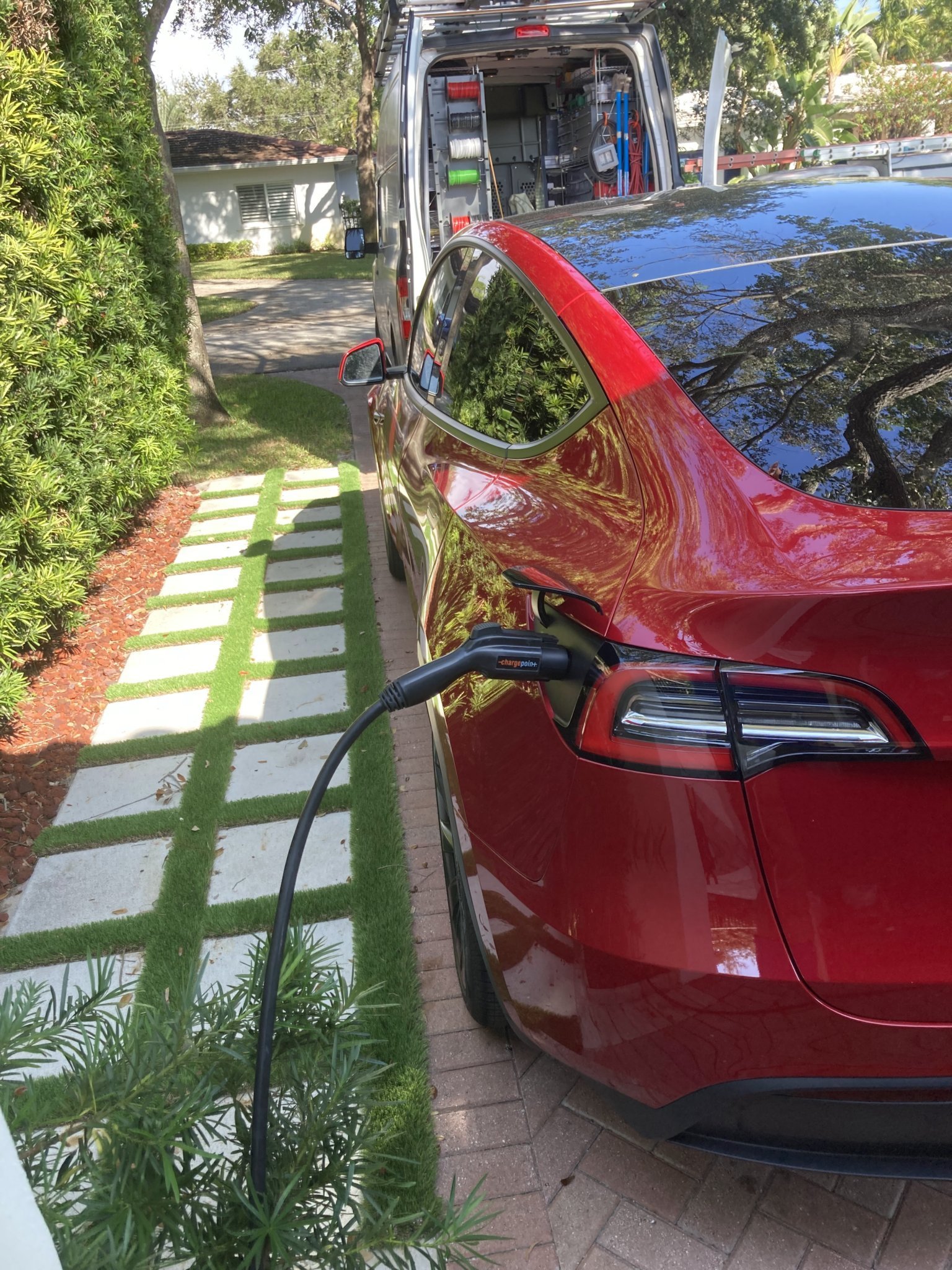
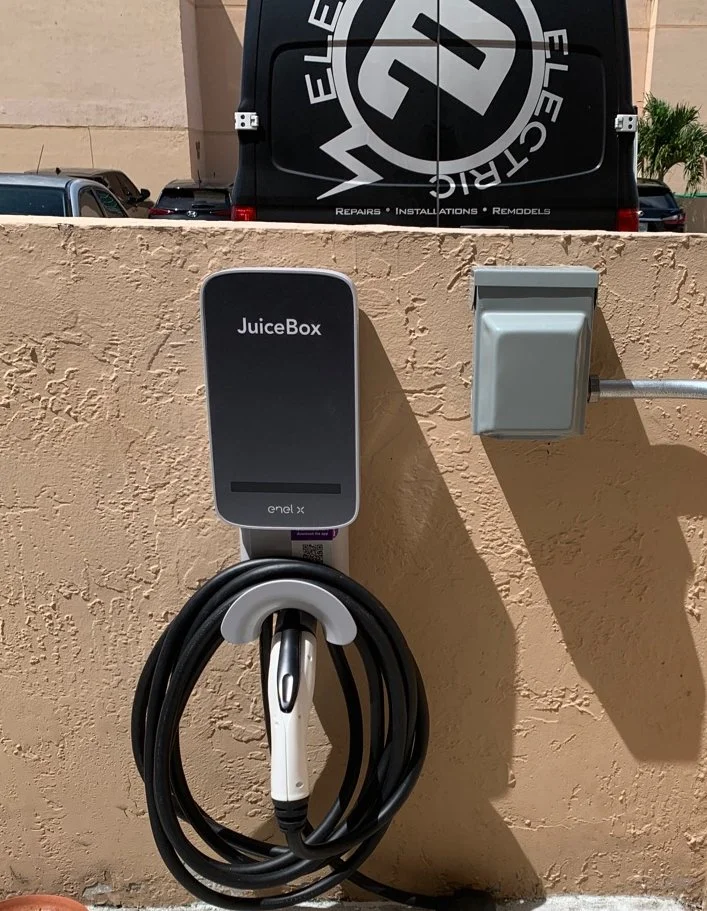
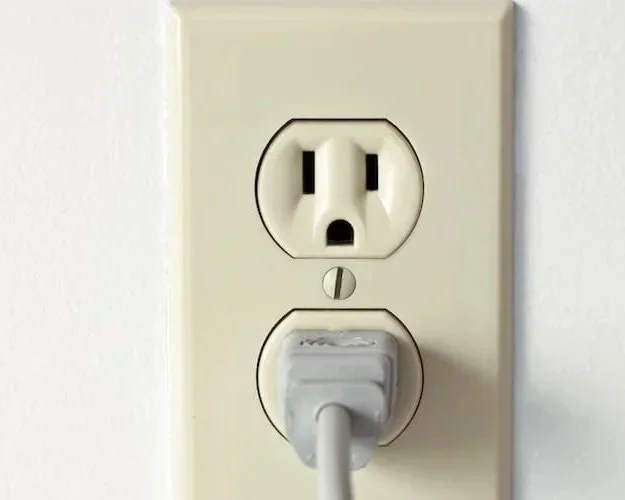
As electric vehicles become more popular, many homeowners ask a simple question: Can I charge my electric vehicle using a standard household outlet, or do I need a dedicated EV charger?
While both options can charge an electric vehicle, there are significant differences in charging speed, electrical requirements, convenience, and long-term practicality. Understanding these differences can help homeowners decide which option is best for their home and driving habits.
Charging with a Standard Household Outlet
A standard household outlet operates at 120 volts, commonly referred to as Level 1 charging. This is the same type of outlet used for lamps, televisions, and other everyday appliances.
Most electric vehicles include a portable charging cable that allows the car to plug directly into a standard outlet.
While this method works, it charges the vehicle much slower than a dedicated EV charging station.
In most cases, a Level 1 charger provides about 3 to 5 miles of driving range per hour of charging. For someone who drives only a short distance each day, this may be sufficient. However, for many drivers, especially those commuting longer distances, the charging speed can be limiting.
For example, fully charging an electric vehicle battery using a standard outlet can take 20 to 40 hours, depending on the vehicle and battery size.
Charging with a Dedicated EV Charger
A dedicated EV charger is typically installed on a 240-volt circuit, similar to large appliances like dryers or ovens. This is known as Level 2 charging.
Level 2 chargers are significantly faster because they supply much more electrical power to the vehicle.
Most residential EV chargers provide 25 to 45 miles of driving range per hour of charging, which allows many vehicles to fully charge overnight.
This is one of the main reasons homeowners choose to install a dedicated charger in their garage or driveway.
Key Differences Between the Two
The main differences between a standard outlet and a dedicated EV charger come down to speed, electrical capacity, and convenience.
Charging Speed
A standard outlet charges very slowly and may take several days to fully charge a vehicle. A Level 2 EV charger can usually charge the same vehicle overnight.
Electrical Power
A standard outlet provides 120 volts and typically uses a 15- or 20-amp circuit. A dedicated EV charger typically operates on a 240-volt circuit with a 40- to 60-amp breaker.
Daily Convenience
With a Level 2 charger, drivers can plug in their vehicle when they arrive home and wake up to a fully charged battery the next day.
Long-Term Practicality
As electric vehicles become more common and battery sizes increase, faster charging becomes more important. Dedicated EV chargers are designed to meet these growing demands.
Is It Safe to Use a Standard Outlet for EV Charging?
While electric vehicles can technically charge from a standard outlet, it is important that the outlet and wiring are in good condition.
Older outlets, worn receptacles, or circuits that are shared with other appliances may not be ideal for continuous charging. EV charging can run for many hours, which places a sustained load on the circuit.
For this reason, many electricians recommend installing a dedicated circuit even when using a portable charger.
When a Dedicated EV Charger Makes Sense
Installing a dedicated EV charger is often the best solution for homeowners who:
Drive long distances daily
Own more than one electric vehicle
Want faster overnight charging
Plan to own electric vehicles long-term
Want the convenience of a permanent charging station
A dedicated charger also increases the overall functionality of the home and can be an attractive feature for future buyers.
Electrical Considerations Before Installing an EV Charger
Before installing a Level 2 charger, an electrician will typically evaluate the home's electrical system. This may include:
Checking the electrical panel capacity
Performing a load calculation
Verifying available breaker space
Ensuring the wiring size and grounding system meet current electrical standards
In some homes, especially older properties, the electrical panel may need to be upgraded or a load-management system may be installed to safely support the charger.
Choosing the Right Charging Solution for Your Home
Both charging options have their place, but they serve different needs. A standard outlet may work as a temporary or backup charging option, while a dedicated EV charger offers the speed and convenience most homeowners prefer.
For many electric vehicle owners, installing a Level 2 charger at home provides the best balance of efficiency, reliability, and daily convenience.
A professional evaluation of your electrical system can help determine the safest and most effective way to power your EV charger and ensure the installation meets current electrical code requirements.