
Is Aluminum Wiring Safe? What Every Homeowner Needs to Know
CONTACT US TODAY FOR A FREE QUOTE
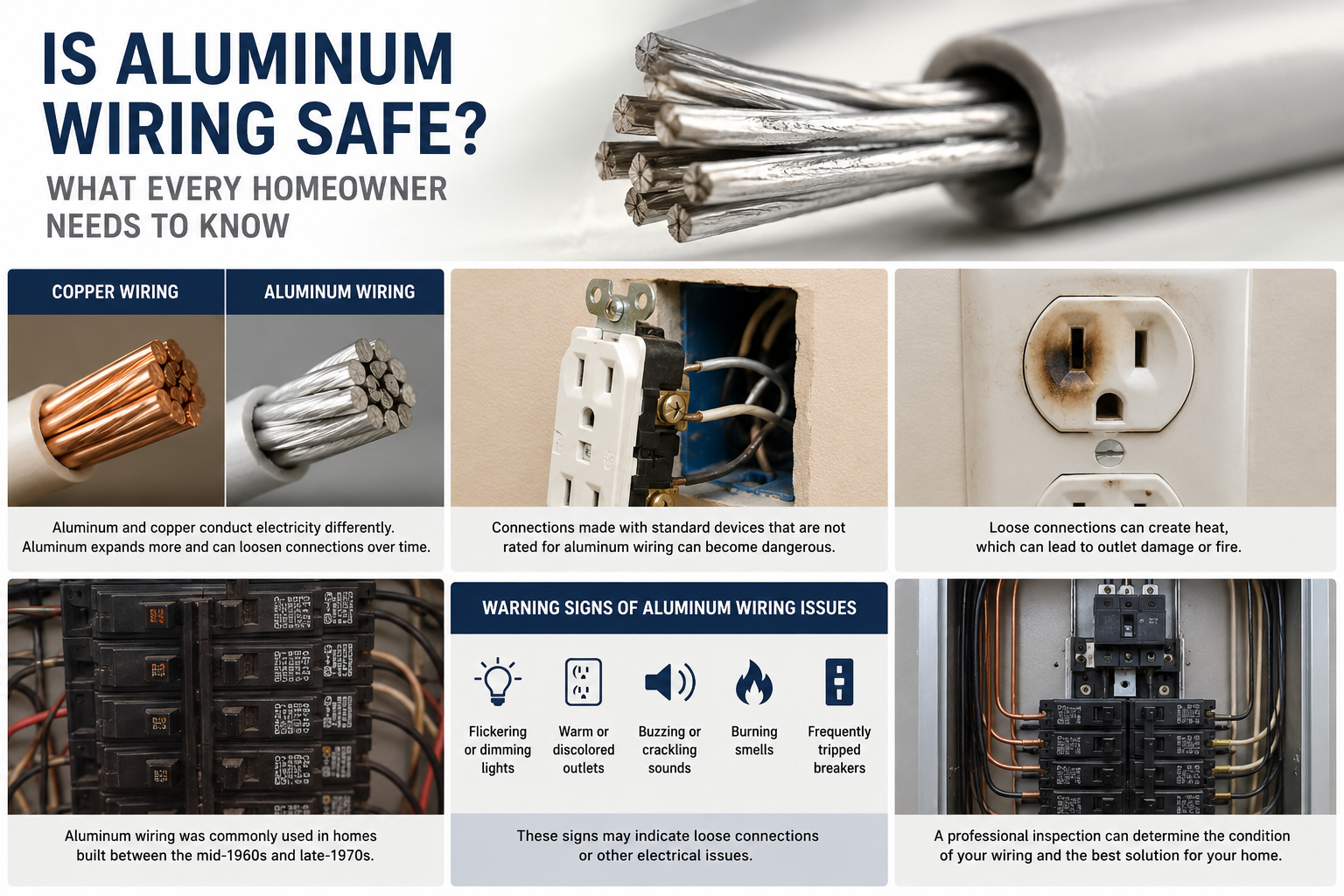
Electricity powers nearly every aspect of modern life, from lighting and appliances to air conditioning and electronics. Behind the walls of your home, the wiring system plays a critical role in delivering that power safely and reliably. If your home was built between the mid-1960s and late 1970s, there is a possibility that some or all of the branch-circuit wiring was installed using aluminum conductors instead of copper.
Aluminum wiring was widely used during this period as a cost-effective alternative to copper. While many homes with aluminum wiring continue to operate safely today, years of experience have shown that certain characteristics of aluminum can create reliability and safety concerns when connections are not properly maintained or updated.
If you've recently purchased an older home, are planning a renovation, or discovered aluminum wiring during a home inspection, you may be wondering whether it poses a risk to your family and property. The good news is that aluminum wiring does not automatically mean your home is unsafe. However, understanding the potential issues, warning signs, and available solutions is essential for making informed decisions about your electrical system.
In this article, we'll explain how aluminum wiring differs from copper wiring, why it can create problems over time, and what steps homeowners can take to improve the safety and reliability of their home's electrical system.
1. Aluminum Expands and Contracts More Than Copper
One of the biggest concerns with aluminum wiring is its tendency to expand and contract significantly as electrical current flows through the conductor.
Every time electricity passes through the wire, it heats up slightly. As it cools, the conductor contracts.
Over years of heating and cooling cycles, connections can gradually loosen at:
Electrical outlets
Switches
Junction boxes
Circuit breakers
Loose electrical connections create resistance, and resistance creates heat.
Heat buildup is one of the leading causes of electrical failures and potential fire hazards.
2. Aluminum Oxidizes Over Time
When exposed to air, aluminum naturally forms an oxide layer on its surface.
Unlike copper oxidation, aluminum oxide is highly resistant to electrical flow.
As oxidation develops at connection points, resistance increases, causing:
Overheating
Voltage drops
Flickering lights
Intermittent power issues
If left uncorrected, these conditions can continue to worsen over time.
3. Connections Can Loosen
Many older outlets and switches were originally designed for copper conductors.
When aluminum wiring is connected to devices not rated for aluminum, the connection can deteriorate more quickly.
This may result in:
Warm outlets
Buzzing sounds
Discolored receptacles
Intermittent electrical operation
In severe cases, the connection may overheat enough to damage the device or surrounding wiring.
4. Increased Risk of Arcing
Loose or deteriorated electrical connections can create arcing.
Electrical arcing occurs when electricity jumps through the air between two conductors instead of flowing through a secure connection.
Arcing generates extremely high temperatures and can ignite surrounding combustible materials.
Because arcing often occurs inside electrical boxes or behind walls, homeowners may not realize a problem exists until significant damage has occurred.
Common Warning Signs of Aluminum Wiring Problems
If your home contains aluminum wiring, watch for signs such as:
Flickering lights
Dimming lights when appliances turn on
Warm switches or outlets
Buzzing or crackling sounds
Burning odors
Frequently tripped breakers
Discolored outlets or switch plates
Intermittent power loss
These symptoms do not automatically mean your wiring is unsafe, but they should be evaluated by a licensed electrician.
Does Aluminum Wiring Mean My Home Is Unsafe?
Not necessarily.
Many homes with aluminum wiring continue to operate safely today.
The concern is not usually the wire itself, but rather the condition of the electrical connections and whether approved repair methods have been used.
A professional inspection can determine:
The extent of aluminum wiring present
The condition of existing connections
Whether corrective measures have already been performed
Whether additional repairs are recommended
How Aluminum Wiring Can Be Corrected
Several approved methods can improve the safety and reliability of aluminum wiring systems.
Depending on the home's condition, solutions may include:
Aluminum-Rated Devices
Special outlets, switches, and connectors designed for aluminum conductors can help improve connection reliability.
Approved Aluminum-to-Copper Connections
Special connectors can be used to create copper "pigtails" that connect aluminum wiring to modern devices.
These connectors must be installed using approved methods and materials.
Complete Rewiring
In some cases, homeowners choose to replace aluminum branch-circuit wiring entirely with new copper wiring.
While this is typically the most expensive option, it provides a long-term solution and allows the home's electrical system to be modernized.
Benefits of Upgrading Aluminum Wiring
Correcting aluminum wiring issues can provide several benefits:
Improved electrical safety
Reduced risk of overheating connections
More reliable electrical performance
Greater confidence during home sales and inspections
Better compatibility with modern electrical devices
Many insurance companies and home inspectors also view professionally repaired aluminum wiring more favorably than untreated systems.
When Should You Have Aluminum Wiring Inspected?
If your home was built between 1965 and 1973 and you are unsure whether aluminum wiring is present, an electrical inspection is a good investment.
You should also consider an inspection if:
You recently purchased an older home
You are planning a renovation
You experience flickering lights or other electrical issues
Your insurance company requests an evaluation
A home inspection identified aluminum wiring
Final Thoughts
Aluminum wiring does not automatically mean a home is unsafe, but it does require proper evaluation and maintenance. Over time, loose connections, oxidation, and thermal expansion can create conditions that increase the risk of overheating and electrical failures.
If your home contains aluminum wiring, a professional inspection can identify potential concerns and recommend the safest path forward. Addressing issues early can help protect your home, improve reliability, and provide peace of mind for years to come.